
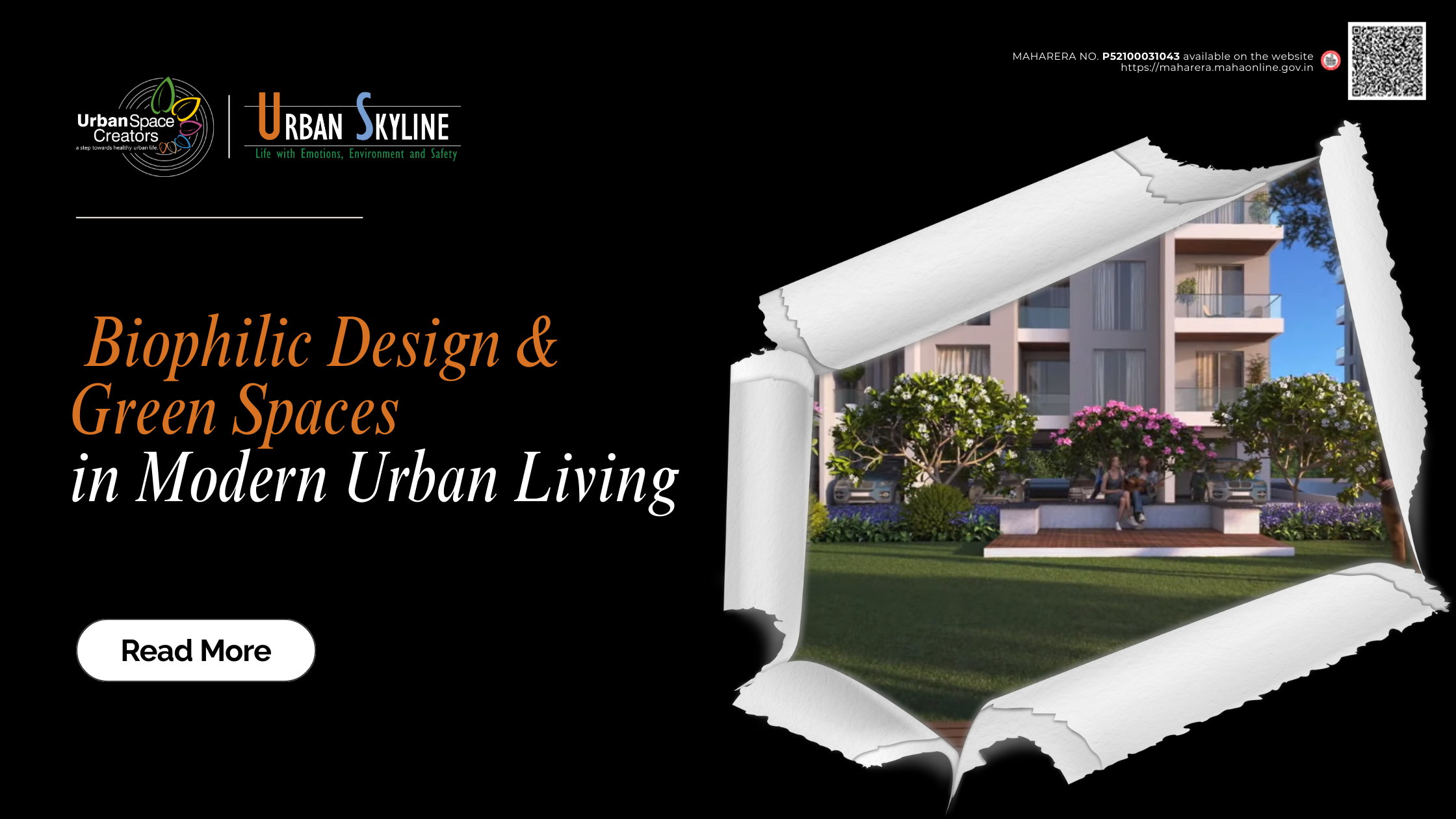
Biophilic design is becoming one of the biggest trends in today’s urban homes. It focuses on bringing nature closer to people—improving health, comfort, and sustainability in modern high-rise environments.
1. What Is Biophilic Design?
Biophilic design means creating living spaces that connect people with nature.
It usually includes:
- Natural illumination & ventilation
- Vegetation for both indoor and outdoor
- Eco-friendly planning and green materials

2. Rooftop Gardens: Nature Above the City
- Why Rooftop Gardens Matter
- Reduce heat and keep buildings cooler
- Create calm, green zones in crowded cities
- Support small birds, butterflies, and other species
- Offer peaceful community spaces for relaxation
Rooftop gardens turn unused roof areas into beautiful, functional landscapes.
3. Vertical Green Walls
- Serve as organic air filters.
- Release oxygen and absorb pollutants.
- Insulate building walls to save energy.
- Enhance the building’s appearance
4. Planted Rooftops: Greenery at Every Level
- Reduce the heat in the area by providing shade.
- Assist with rainwater management and building protection
- Include seclusion and aesthetic appeal.
- Provide residents with small outdoor areas.
These terraces bring nature closer to people living on higher floors.
5. Indoor Living Walls: Wellness Inside the Home
Key Advantages:
- Purify indoor air
- Regulate humidity
- Create a calming, soothing environment
- Add a natural design element to interiors
Indoor living walls support a healthier lifestyle in compact urban homes.
6. How Biophilic Design Helps the Environment
- Lowers energy consumption
- Reduces the heat-island effect in cities
- Encourages biodiversity
- Supports sustainable, eco-friendly living
These features make modern buildings greener, smarter, and more comfortable.
7. Urban Skyline Phase 2
Urban Skyline Phase 2 incorporates many biophilic design elements, including rooftop gardens, planted terraces, and extensive landscaped areas. These specialities help create a healthier living environment and show how modern residential projects can successfully combine lifestyle amenities with sustainable, nature-friendly design.
